Commodity Market
The commodity market is an online and offline marketplace for raw products. Located around the world, these commodities are available in a variety of types and quantities. Organizations such as the Chicago Board of Trade are responsible for regulating the commodity market.
What Is the Commodity Market?
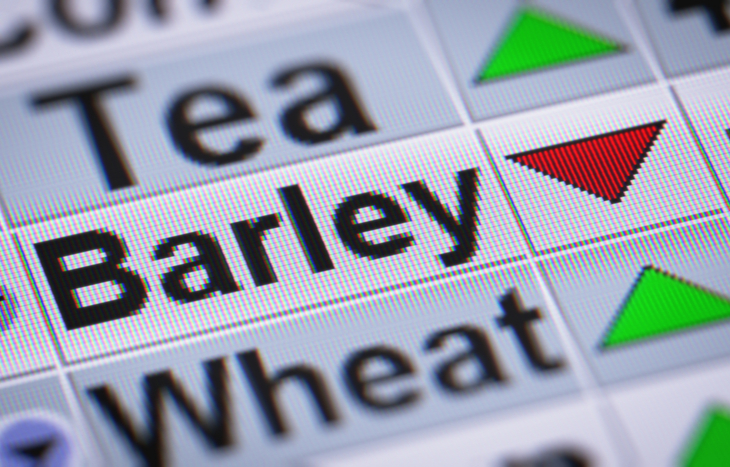
Currently, there are around 50 major markets around the world for commodity trading. At the moment, you can buy or sell about 100 primary commodities. In general, you can purchase a hard or soft commodity. Hard commodities are often extracted or mined. Soft commodities are things like sugar, corn, pork or coffee. Other soft commodities include livestock or agricultural products.
A commodity is essentially an asset you can touch that is interchangeable for a similar asset. For example, wheat is a commodity because you could buy a bushel of wheat from anyone, and it would be exactly the same. A book is not a commodity because one novel is not interchangeable for another novel.
Raw products and natural resources are typically considered commodities. For example, you can buy gold, coffee, pork and oil on a commodity market. In the United States, the biggest commodity exchanges are the Chicago Mercantile Exchange, the New York Mercantile Exchange, the New York Board of Trade and the Chicago Board of Trade.
How Does Commodity Trading Work?
As a trader, you generally do not want to actually buy a ship full of oil because of the costs of transporting and storing it. When you trade in commodities, you trade using futures contracts. A futures contract is essentially an agreement that you will buy or sell something at a certain date in the future for an agreed-upon price. If you are trading in commodities, you are trading these kinds of contracts instead of exchanging the physical product. Eventually, the final person who holds the contract will receive the actual commodities.
Before futures contracts existed, farmers, buyers and commodity traders had to deal with ever-changing prices. If a wheat farm planted extra wheat this year, it would have no clue if the wheat would eventually sell for $5 or $7 at the end of the year. This made it difficult for farmers to plan ahead and become profitable.
Likewise, wholesale buyers were also at a disadvantage. The price of wheat could fluctuate between now and harvest time. Therefore the wholesale buyer could not guarantee that the price of their supplies would not rise as well. These challenges are the reason why futures contracts began.
When you buy or sell a commodity today, you are generally trading in futures contracts. Unfortunately, due to changing prices, commodities trading can also impact low-income people negatively. Trading activity in the commodity market may cause price changes that are not actually based on the underlying supply or demand.
Today, all commodity contracts are set in United States dollars. Financials like the euro FX are also traded through the futures market. Additionally, you can find interest rates for the 10-year Treasury note in this marketplace as well.
How Can You Invest in the Commodity Market?
There are several ways you can invest in the commodity market. The most direct technique is to buy a futures contract. You can also buy stocks in a company that relies on commodity prices. Many exchange-traded funds (ETFs), mutual funds and index funds also focus on companies connected to the commodity market.
What Are the Major Exchanges and Regulatory Bodies?
While there are other exchanges based around the world, the U.S. is home to some of the largest. The following are some of the exchanges, regulatory bodies and markets you will hear about if you start investing in commodities.
- Chicago Board of Trade (CBOT): Organized in 1848, the CBOT trades in commodities like silver, oats, ethanol, rice, soybeans, gold and wheat.
- Chicago Mercantile Exchange (CME): The CME is trades commodities like lumber, lean hogs, feeder cattle, milk, pork bellies and cattle.
- Commodity Futures Trading Commission (CFTC): This is the regulatory body in the United States for commodity markets.
- Kansas City Board of Trade (KCBT): This is a regional center for trading commodities, and it focuses primarily on agriculture.
- London Metal Exchange: Outside of the United States, the London Metal Exchange is one of the leading commodity exchanges in the world.
- Minneapolis Grain Exchange (MGE): Like the KCBT, this is a regional center for commodity trading in agricultural products.
- New York Board of Trade (NYBOT): Established in 1870, The NYBOT handles commodities like orange juice, ethanol, cocoa and sugar.
- New York Mercantile Exchange (NYMEX): When you trade on the NYMEX, you can find commodities like aluminum, heating oil, electricity, copper, oil, propane, gold and palladium.
- Tokyo Commodity Exchange: The Tokyo Commodity Exchange is one of the top exchanges in the world.
While commodities are typically traded electronically, there are some American exchanges that operate through the open outcry method. Commodities purchased from outside of a standard exchange must use the over-the-counter (OTC) market. For many, commodity trading can be complex. Therefore it is important to spend time learning and researching the topic before you make your first trade.
Join Our Free Investment U E-letter
Interested in expanding your knowledge of commodity markets or other investment areas? Sign up for our free Investment U e-letter below and start making smarter, wiser investment decisions today!