
Natural Gas Investing – An Investor’s Guide
What is Natural Gas?
Natural gas isn’t what you put in your car, or what you use to barbeque. It’s one of the cleanest and safest fossil fuels available.
Natural gas consists of about 90% methane and small amounts of other hydrocarbons. You can find natural gas with other fossil fuels in coal beds, where plants and animals have decayed under silt, rock and sand. The gas is highly combustible, and when burned it gives off an enormous amount of energy without emitting as much CO2 as other fossil fuels.
In this age of environmentalism, natural gas’s clean and powerful energy makes it a popular energy choice. That’s part of the reason natural gas investing is on an uptrend.
Natural Gas Investing
Natural gas currently makes up 23% of the world’s energy. By 2040 experts expect this number to rise to 26%. That may not seem like a large increase, but global energy demand is expected to grow 25% over that time span. That means the natural gas market should expand by 40% by 2040.
Natural gas is edging out other fossil fuels and has been for some time. The tides are finally turning. Natural gas investing has the potential to reward investors big time. It is without a doubt one of the hottest commodity investments available.
Natural Gas Investing: What the Experts Think
Petroleum companies acknowledge that natural gas demand is growing. Patrick Pouyanné, CEO of French petroleum refining company Total S.A., said:
“Natural gas is flexible enough to offer the right combination with renewables… we are positioning Total more and more in gas, and in 35 years Total will distribute more gas than oil.”
Exxon Mobil acknowledges that “natural gas is a major game changer with fewer emissions, flexibility, and abundance.”
Investment U’s Energy Expert, David Fessler believes “the U.S. will become energy independent within a decade or so. Part of that story involves natural gas as a transition fuel to cleaner energy.”
Experts from all over the world would agree that natural gas production is on the uptick. It is abundant, cleaner, and has many different uses. Natural gas investing will become more popular as the world’s biggest energy companies move away from oil and towards natural gas.
Natural Gas Uses
Natural gas is crucial to the United States’ and the world’s many needs. People use it in a variety of ways…
- Natural gas heats about 50% of homes in the U.S.
- Natural gas helps make propane.
- Natural gas produces 95% of the world’s ammonia, 90% of which is used for fertilizer.
- Natural gas generates 33% of the country’s electricity.
- Natural gas helps make paints, plastics, antifreeze and medicines.
With its many uses, investing in natural gas increases your portfolio’s diversity. And there are many ways to invest in the natural gas trend without directly investing in the fossil fuel. Natural gas pipelines are a great example.

Natural Gas Pipelines
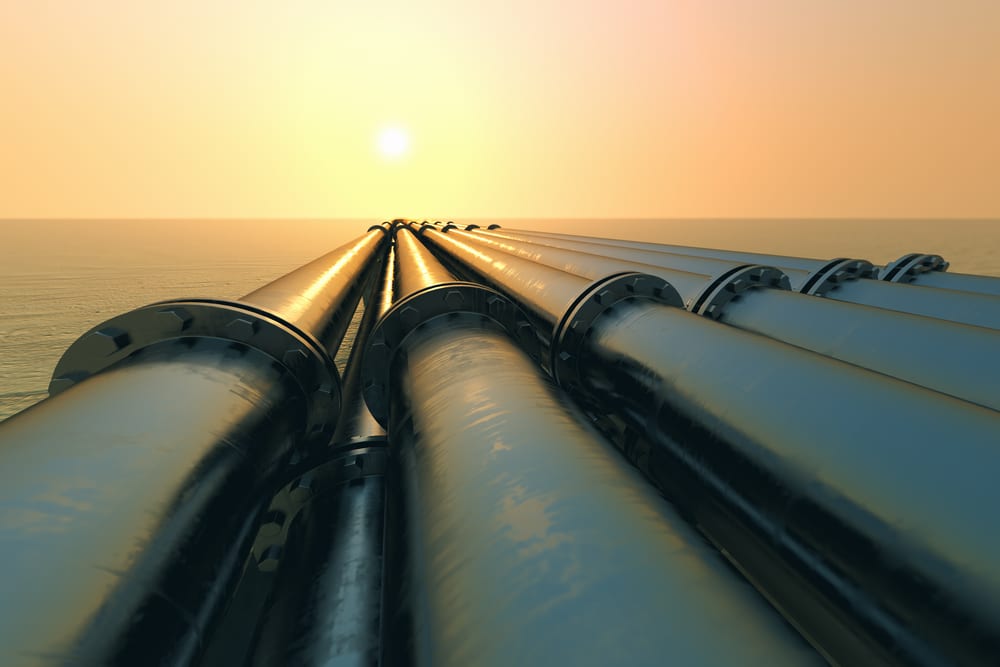
Natural gas, in its gaseous state, can only travel by pipeline. There is already a massive pipeline infrastructure in place in the U.S.
According to the Bureau of Transportation Statistics, there are over 1.6 million miles of natural gas pipeline. That’s compared to just 215,000 miles of pipeline for oil.
Despite the massive pipeline infrastructure already in place, there are plans for expansion.
Experts estimate that over the next 18 years, investors will spend $800 billion on pipeline infrastructure for oil and gas. Of that amount, $417 billion will go to natural gas pipelines. That’s an average of $23 billion spent each year. Investing in pipelines is a great entry point for natural gas investing.
For more information on investing in natural gas pipelines, check out our article “The Top 4 Pipeline Stocks to Watch.”
Liquified Natural Gas (LNG)
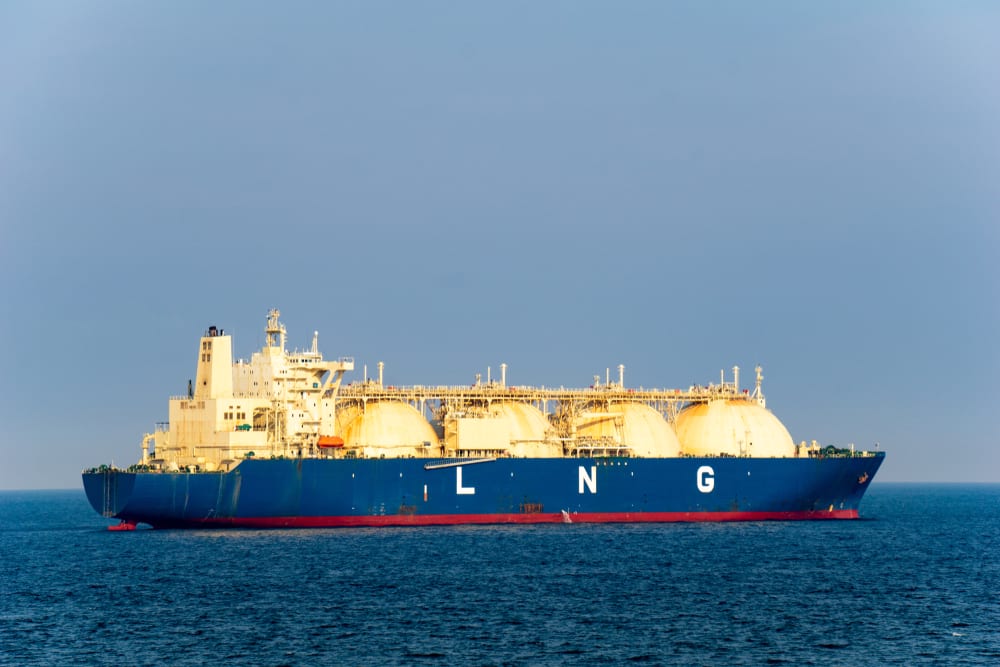
The U.S. also exports natural gas to Mexico and Canada either via pipeline or as liquified natural gas (LNG).
Liquefied natural gas can be shipped by truck or ship. LNG is much denser than natural gas in its gaseous state: natural gas takes up to 600 times the volume of LNG.
By the end of 2019, U.S. LNG export capacity should reach 8.9 billion cubic feet per day. That will make the U.S. the world’s third largest LNG exporter, behind Australia and Qatar.
Natural Gas Price Drivers
The Economy
The economy factors into any investment decision. When the economy is thriving, the demand for natural gas increases. That’s because a healthy economy promotes industrial output which requires more natural gas. When the economy slumps, the industrial output decreases, and the demand for natural gas decreases with it.
Cyclical Factors
The demand for natural gas is cyclical and seasonal, with the highest demand in the winter months and the lowest demand in the summer months. Natural gas is a popular fuel source for heating homes and buildings. Typically, natural gas demand is the highest through January and February to heat homes.
Fuel Switching
Fuel switching is the ability to replace one fuel source with another. Industrial consumers and utility companies are very conscious of costs, so they will track the prices of fossil fuels and use the cheapest option.
Fuel switching is an instance of price affecting demand instead of demand affecting price. For example, if the price of natural gas is too high, an electric company may switch to a cheaper alternative like coal. This decreases the demand for natural gas. Companies with the ability to switch fuel sources actually play a large role in the price of natural gas.
Supply
Supply and demand affect every commodity’s pricing. The U.S. Energy Information Administration gives a weekly natural gas storage report. Natural gas prices fluctuate as a result of these reports.
The Henry Hub
The Henry Hub is a natural gas distribution hub located in Erath, Louisiana. The hub connects the country’s largest pipelines including the Transcontinental, Acadian and Sabine pipelines. The Henry Hub’s connectivity makes it a good gauge of supply and demand. That’s why it’s the pricing point for natural gas futures on the New York Mercantile Exchange.
The average price, or the settlement price, for the day at the Henry Hub is used for the entire North American natural gas market. When it comes to natural gas investing, the Henry Hub is like Wall Street.
Natural Gas Investing: 3 Ways
Futures
Futures are one of the most direct avenues for natural gas investing. Futures are contracts in which an asset is bought or sold at a fixed price at some point in the future. In the natural gas space, futures are a popular investment vehicle because the price of gas is very volatile. Behind crude oil, natural gas futures are the second most highly-traded contract on the Chicago Mercantile Exchange.
Stocks
There are so many companies in the natural gas space. Some are involved directly, some are a few degrees removed. The most successful companies in the natural gas space are the ones involved in natural gas exploration, transportation and production.
EQT (NYSE: EQT) is engaged in natural gas exploration. The company surveys land all over the continent in search of shale and natural gas pockets. The company then acquires the land and extracts the natural gas. EQT is the largest natural gas producer in North America. Investing in companies that survey and extract natural gas can be a great natural gas investment.
Some companies are dedicated to building pipelines for transporting natural gas. For example, Kinder Morgan (NYSE: KMI) is a natural gas infrastructure company. Natural gas transportation is much more complicated than oil which can be transported by truck, train, or tanker. Without natural gas pipelines there is no natural gas. Kinder Morgan has positioned itself to land big pipeline contracts across the U.S.
Liquefied natural gas (LNG) can be transported by sea to countries that wouldn’t otherwise have access to natural gas. Royal Dutch Shell (NYSE: RDS-A) is an industry giant in the oil and gas space. It was the second-largest natural gas producer in the world last year. What sets Royal Dutch Shell apart from so many natural gas suppliers is its international reach. The company liquifies gas and ships it abroad.
ETFs and ETNs
Natural gas ETFs are becoming more popular. ETFs are securities designed to track a benchmark in any given industry. It is essentially a basket of assets. ETFs trade like stocks and their price can vary every day. When it comes to natural gas, there are two main types of ETFs: Natural gas ETFs that track the price of gas itself, and ETFs that track equity of exploration and production companies.
If ETFs function like stocks, ETNs function like bonds. ETNs or exchange traded notes, are securities that are issued as debt notes. ETFs and ETNs are a great way to begin investing in natural gas.
Three of the largest natural gas ETFs and ETNs are the VelocityShares 3x Long Natural Gas ETN (NYSE: UGAZ), the United States Natural Gas Fund (NYSE: UNG) and the United States 12 Month Natural Gas ETF (NYSE: UNL).
The VelocityShares 3x Long Natural Gas ETN provides three times leverage of natural gas prices. This is a fund for investors who are bullish on natural gas.
The United States Natural Gas Fund is the oldest and most popular natural gas ETF. It gives investors solid exposure to natural gas markets through a variety of different assets.
The United States 12 Month Natural Gas ETF is an ETF that invests in 12 natural gas contracts. This fund avoids some of the price volatility associated with natural gas while still providing exposure to natural gas futures.
Action Plan
Natural gas investing can be lucrative. Demand for natural gas is growing by the day. Now could be a great time to invest. There are certainly natural gas plays to be made in Pennsylvania. Keep an eye out for a more detailed analysis of four natural gas stocks to watch. In the meantime, check out our other commodity investing articles.