How to "Turn Back the Clock" on this $174 Billion Tech Titan
Perhaps you think it's impossible to score another 1,000% gain off this "tech titan" stock. Think again. An unusual strategy lets you virtually "recreate" gains off the biggest companies you thought had come and gone. CLICK HERE to see how it works.


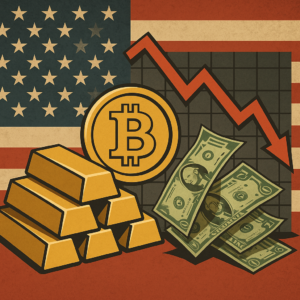
Why We Need A Weak Dollar

by Louis Basenese, Advisory Panelist
Senior Analyst, The Oxford Club
Wednesday, June 17, 2009: Issue #1020

Two weeks ago, at a financial conference, a member of the audience asked an all too familiar question, “What’s your view on the U.S. dollar?”

Long-time readers know I never shy away from this topic.

In fact, last year, when everyone else believed the world’s reserve currency was about to be usurped by the euro, I predicted it would rally and we would see the end of the weak dollar. And rally it did. After the impressive move, of course, I changed my stance on the falling dollar.

And since that time I’ve only become more convinced the U.S. dollar is doomed to lose value over the long term. Here’s why we need a weak dollar…

Why We Need A Weak Dollar: A Dramatic Shift in Power

One of the first reasons why we need a weak dollar is that we are witnessing a dramatic shift in the balance of power. For decades, the U.S. dollar garnered strength from our big spending ways. After all, we were the world’s largest economy and the buyers of last resort. But now we’re getting serious competition from emerging economies.

“The emerging world is not just a source of supply [anymore] but also a source of demand,” says Robert Sinche, head of strategy for currencies, global rates and commodities for Bank of America.

For instance, Brazil, Russia, India and China alone now account for 15% of global GDP, up from 8.7% in 2004.

As time elapses, the relative size of the U.S. economy will only continue shrinking, bringing its significance and, ultimately, the value of the U.S. dollar down with it.

Second, U.S. policymakers want and actually NEED a weak dollar. It’s the only way to make our goods cheaper to foreign buyers and in turn, start shrinking our massive, and record, current account deficit.

As it stands now, the U.S. budget deficit to GDP ratio rests at 13.1% – one of the highest among G-10 nations and up from 3.2% in 2008. In 2010, it will stay in double-digit territory, around 10% – this all but ensures we’ll keep issuing new Treasury securities, which every investor knows weakens a currency.

The last reason the dollar will falter is because we don’t have any control over it. Our fate lies in foreigner’s hands. With countries like China and Russia particularly, buying so much U.S. debt they can easily influence the value of the dollar.

And it won’t take drastic measures like selling their current holdings or refusing to buy any more Treasuries. All they have to do is stop buying so much of our debt, which recent statements from foreign governments suggests is becoming a strong possibility.

Three Ways to Insulate Your Portfolio From a Dollar Decline

If a long-term dollar decline is imminent, how do we protect our portfolios? One obvious way is to buy an ETF that gives us short exposure. However, I don’t think that’s adequate. We need a more comprehensive approach. I would recommend tactically adjusting your asset allocation to make sure it includes the following:

  • Commodities. Real assets will appreciate in value as the dollar weakens. Look no further than the recent rise in oil for proof.
  • International companies doing a majority of business outside the United States. Such companies provide a hedge against a weakening dollar, as well as a way to capitalize on the growing significance of international consumers. In other words, they offer us two ways to profit.
  • U.S. companies doing significant amounts of business overseas. By focusing on U.S. companies with at least 25% of business overseas, we can diminish the impact of a weak dollar. As the U.S. dollar falls in value these foreign profits will become more valuable.

In the end, I’m not about to join the camp of pundits proclaiming the U.S. dollar will lose its status as the world’s reserve currency. That’s not going to happen, just like a prisoner with a life sentence is never going to get out of jail. There are just no alternatives.

That being said, I am convinced the dollar will struggle mightily in the years ahead while we try to rid ourselves of a crushing deficit and emerging economies become even bigger consumers. So make sure you invest accordingly.

Good investing,

Louis Basenese

More on this topic (What's this?)
Is the US Dollar the Anti-Stock Trade?
Equity-Dollar Correlation: The Long View
Read more on U.S. Dollar (USD) at Wikinvest
Related Investment U Articles:


McAfee Secure sites help keep you safe from identity theft, credit card fraud, spyware, spam, viruses and online scams
Sign Up now and receive this Free report:

Contrarian Investing: Why It's Last Call for These Three Contrarian Investment Opportunities.


The Company Set to Dominate a $60 Billion-a-Year Market

$60 billion is spent on cancer treatment in the U.S. - each year. And one company is poised to receive the lion's share of it.

The medical director at the Alta Bates Comprehensive Cancer Center says, "...possibly a third of our cancer patient population will soon be undergoing this [company's] treatment."

Another doctor at the University of Texas MD Anderson Cancer Center says he intends to treat over 1,000 patients a year with this technology.

Here's how you can claim your stake in the company before this cash infusion sends shares soaring.

Share Investment U:
  • email
  • Print
  • Digg
  • Sphinn
  • del.icio.us
  • Facebook
  • Google Bookmarks
  • Propeller
  • StumbleUpon
  • Technorati
  • Yahoo! Buzz
  • Reddit
  • NewsVine
  • SphereIt
  • Twitter

11 Responses to “Why We Need A Weak Dollar”

  1. Sam Says:
    June 17th, 2009 at 5:36 am

    The fact that foreigners own so many US dollars gives them an incentive to prop up the US dollar. In so doing, they reduce the damage to the value of their US dollar investment.

    Reply

  2. Pat De Esposito Says:
    June 17th, 2009 at 5:52 am

    Sadly, I believe the dollar is doomed. We, as a nation are too far down the slippery slope to turn back. What is the morality of paying off debts with cheaper dollars? Is it different from stealing?

    p.s. I used to work with a man named Clayton Guth. Is Julia Guth a relative?

    Reply

  3. Kunkiw Lee Says:
    June 17th, 2009 at 6:11 am

    I would like to learn What is INVESTMENT U.

    I hope your guide.

    Reply

  4. Garry Says:
    June 17th, 2009 at 9:58 am

    A weaker dollar is also a way of paying (repudiating) our debt. What is the alternative?
    Are we actually going to pay back what we owe?
    I doubt it.

    Reply

  5. jim Says:
    June 17th, 2009 at 10:45 am

    This letter today — and your comments re. the dollar — make a lot of sense — thank you.

    Reply

  6. Ronald L. Lyons Says:
    June 17th, 2009 at 10:55 am

    Your simile: “like a prisoner with a life sentence” is poignant. I heard Fred Angel of the Treasury say that he would do anything to maintain the dollar’s status. A man in prison still clings to the bars in hope.
    Thank you,
    RLL

    Reply

  7. ron s Says:
    June 17th, 2009 at 11:42 am

    GOOD ARTICLE,BUT HOW DO WE INVEST IN COMMODITIES.
    THROUGH ETF’S OR HARD HANDS ON REAL COMMODITIES.

    Reply

  8. Sridhaba Mahapatro Says:
    June 18th, 2009 at 5:04 am

    As per your view if US $ loses its weight or when it weakens compare to most of the currencies,do you expect the international gold price which has a negative corelation with US $ will go up from this level.

    Reply

  9. Joe Says:
    June 18th, 2009 at 6:22 pm

    The Dollar has been weak for several years now, since 2002 it has plunged against most major currencies. Although declining in value, I don’t think its doomed. Its not the end of the world but more of an era. International economies are expanding impressively relative to the US. I live overseas and have noticed that the standard of living in the country where I reserve is about on par with the USA.
    A “doomed” dollar though would be an ominous sign for the USA as a whole since its a unit of our nation’s wealth and buying power, and relative to the rest of the world that buying power has diminished considerably. I still think “Doomed” is a bit too strong maybe losing its shine more than anything.

    Reply

  10. MoneyDragon Says:
    June 21st, 2009 at 12:10 pm

    The dollar is doomed – the only question is when the broad populace will see it. I was laughed at when I predicted 1.50 vs the Euro – how could the all powerful nation with the most nukes ever slip to $1.50? OK, next target is $2.00.

    Regarding the question about the intenational gold price – I don’t see it move very far for a while. In fact, I see gold falling first. You can’t eat gold; it is a safety valve only in normal recessions – this one ain’t normal. In fact, it is a depression in its childhood.

    The dollar problem goes very deep – the dollar has lost app. 94% of its value since the inception of the Fed. Devalution (= inflation) is built into the system as a way of stiffing stupid investors.

    The question about how to invest in commodites is a good one. I don’t know whether I’ll be right, but I am inclined to buy foreign producers, e.g. Canadian mines from potash to oil. This way you particpate in commodities but also protect your money.

    Reply

  11. Carlo Mendez Says:
    June 22nd, 2009 at 8:14 am

    What backs up the US dollar are US goods and there are plenty/endless choices. Thus holders of US dollars can cash in their holdings by purchasing US products.

    Reply

Comments

**By submitting your comment you agree to adhere to our Comment Policy and Privacy Policy.

Check out our selection of daily Investment Research:

IU Blackboard IU Archives


This investment could put a good chunk of cash in your pocket. So why is your broker practically forbidden to tell you about it? Find out...

Recent Articles


Search Investment U


Platinum Services

Oxford Club
The Oxford Club
is an exclusive, global network of investors, who collectively participate in the pursuit of prosperity and wealth. The Club is renowned for its market-beating, tried-and-true investment principles.


White Cap The White Cap Report exclusively identifies companies, White Caps, which - by being among the earliest to gain traction - have secured dominant positions within untapped, billion-dollar markets.

A More Profitable Way to Play the Market


What Readers Are Saying…

"Always enjoy what you have to say, and learn something new (and useful) almost every time. Thanks again for your outstanding work." Jeff K.

"I just want to say a quick thank you to Alexander Green for not only his sage advise, but his reassuring words of encouragement that we all need right now." Bryan W.


Louis Basenese, Small Cap and Special Situations Expert

A former Wall Street consultant and analyst, Louis helped direct over $1 billion in institutional capital before joining forces with The Oxford Club.

For the past five years he's collaborated with 16-year Wall Street veteran and Oxford Club Investment Director, Alexander Green, consistently delivering market beating returns to subscribers. He specializes in small cap stocks and special situations including IPOs, mergers and acquisitions, spinoffs and contrarian investments. Learn More...


What Louis Basenese is working on right now:

Louis Basenese has a Rolodex that would blow your mind.

It's full of big Wall Street names – many you'd recognize.

They're the result of spending years as a lead analyst inside one of the world's most powerful financial houses… one with more than $770 billion in assets.

And these days he's found the perfect way to use his power contacts to make a fortune.

He's not pumping them for big inside moves… or where they're investing next.

Well, he is. But it's what he does with that information that's really shocking his readers... and helping them get rich. Find out...