The Most Profitable Contrarian Investment Strategies for 2010 and Beyond
The 2010 Investment U Conference is underway! And even if you couldn't make it, now you can "bring home" more than 30 breakthrough presentations from the conference... Order the Deluxe MP3/Video Library for $99 to listen and view on your computer, or the Premier CD plus MP3/Video Library for $149 to listen to and view anywhere.


Value Investing: Following in The Footsteps of Sir John Templeton

by Alexander Green, Advisory Panelist
Monday, July 20, 2009: Issue #1045

Last week I had a chance to speak with hundreds of investors at FreedomFest in Las Vegas.

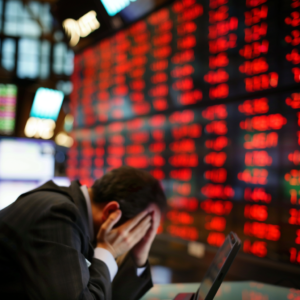
I can tell you that the mood out there right now is unremittingly bleak. And when it comes to value investing, that’s cause for celebration. Here’s why…

Analysts will tell you that stocks only reach bargain levels when they are cheap relative to sales, earnings and book value. But here’s how to know when stocks are cheap without looking at a single number:

  • It’s when people are apoplectic about their stock portfolios.
  • It’s when they are gloomiest about the prospects for the economy.
  • It’s when they wish they had never met their stockbroker.

That’s when stocks are truly cheap. So that’s when it pays to buy them…

Sir John Templeton – Value Investing Through Maximum Pessimism

Sir John Templeton, the man who almost single-handedly pioneered global investing – and was one of the world’s great value investors – knew this. When it came to value investing, he swore that the best bargains could only be found “at the point of maximum pessimism.”

These weren’t just words …

In 1980, a Maoist guerilla organization in Peru called the Shining Path took over the country, imposing what it called “a dictatorship of the proletariat.” The country reeled from the violence and brutality. The United States, Canada and the European Union branded the Shining Path a terrorist group and curtailed economic activity.

The Peruvian stock market, understandably, collapsed.

Templeton wanted desperately to buy Peruvian stocks while they were dirt cheap. He knew that things would get better – and so would the performance of the Peruvian market.

Unfortunately, foreigners were not allowed to buy Peruvian shares.

Templeton was undeterred. He formed a Peruvian corporation and used it as a holding company to buy up the nation’s leading companies.

And, sure enough, the Shining Path, at one time a populist group, fell out of favor with Peruvian citizens. Political bonds were restored. Economic activity picked up again. The Peruvian stock market soared.

And, of course, Sir John Templeton made another fortune for his shareholders.

Ignore the Stale Statistics & Stick to Value Investing

Things in the United States right now are not as bad as they were in Peru in 1980; yet everywhere I go I keep hearing the same stale statistics:

  • We are in the sixth consecutive quarter recession, making this the longest economic contraction since the Great Depression.
  • Unemployment is at a 26-year high – and we’re still losing 500,000 jobs a month.
  • Business investment is down.
  • Spending – and consumer confidence – is anemic.
  • Credit is tight.
  • Home prices are still falling.
  • Corporate profits are weak.

These things are true, of course. But ask yourself this: Which of these well-known facts are not already factored into stock prices? What here hasn’t already been trumpeted in the media hundreds of times before?

It sounds paradoxical, but rampant pessimism about the economic and investment outlook is the stock market investor’s best friend.

Or as resource analyst Rick Rule likes to say, “You can be a contrarian. Or you can be a victim.”

Know this. Act on it. And buy healthy companies while they’re on sale.

If history is any guide, a year from now you’ll be glad you did.

Good investing,

Alexander Green

More on this topic (What's this?)
Most Popular Content Page
Which High Do You Prefer?
Read more on Value Investing at Wikinvest
Related Investment U Articles:


McAfee Secure sites help keep you safe from identity theft, credit card fraud, spyware, spam, viruses and online scams
Sign Up now and receive this Free report:

The Three Best Stocks to Own in 2010.


The Company Set to Dominate a $60 Billion-a-Year Market

$60 billion is spent on cancer treatment in the U.S. - each year. And one company is poised to receive the lion's share of it.

The medical director at the Alta Bates Comprehensive Cancer Center says, "...possibly a third of our cancer patient population will soon be undergoing this [company's] treatment."

Another doctor at the University of Texas MD Anderson Cancer Center says he intends to treat over 1,000 patients a year with this technology.

Here's how you can claim your stake in the company before this cash infusion sends shares soaring.

Share Investment U:
  • email
  • Print
  • Digg
  • Sphinn
  • del.icio.us
  • Facebook
  • Google Bookmarks
  • Propeller
  • StumbleUpon
  • Technorati
  • Yahoo! Buzz
  • Reddit
  • NewsVine
  • SphereIt
  • Twitter

16 Responses to “Value Investing: Following in The Footsteps of Sir John Templeton”

  1. pravin thakrar Says:
    July 20th, 2009 at 11:04 am

    Dear Sir.
    Your comments are sound and I have no problem in believing in them. However, I am UK resident
    and have no experience in USA equities. I need to open a brokerage account to begin with.
    Having lost in UK following collapse it is difficult
    make a fresh start. So many people you met had
    perhaps similar sentiments and loss of confidence.
    A new begging is always difficult if not impossible.

    Reply

  2. Mike Webb Says:
    July 20th, 2009 at 11:29 am

    Alexander Green asked the question which of these factors are not yet at their gloomiest.

    “Things in the United States right now are not as bad as they were in Peru in 1980. Yet everywhere I go I keep hearing the same stale statistics:

    We are in the sixth consecutive quarter recession, making this the longest economic contraction since the Great Depression.

    Unemployment is at a 26-year high – and we’re still losing 500,000 jobs a month.

    Business investment is down.

    Spending – and consumer confidence – is anemic.

    Credit is tight.

    Home prices are still falling.

    Corporate profits are weak.”

    My answer is “that while we do not know the future it is quite possible that none of these factors are yet as gloomy as they may get to be. If the market undergoes another serious downturn, which I believe it will before the end of 2009, we could very easily see index lows significantly lower than previous lows.

    Thanks…Mike Webb

    Reply

  3. Bob Tanner Says:
    July 20th, 2009 at 12:22 pm

    Things are bad and much of that is priced in. But bad can get worse and that is not priced in. If you thought:
    - the recession would last another 3 years,
    - real unemployment (U6) would hit 25%,
    - business investment would pull back further due to lack of business,
    - credit would remain tight due to increased foreclosures from option ARM’s and unemployment,
    - home prices fall even further as the inventory of unsold homes hits new highs,
    - corporate profits do not improve as cost cutting can only match a drop in sales.

    In other words, if you thought we were retracing the path of the Great Depression, would you still advise buying stocks now or wait until there was a confirming signal that we are not and the recession is close to its end?

    Reply

    Simon Reply:

    I couldn’t agree with you more. People were saying the bottom had hit after the 1st dip… boy were they ever wrong. Not only that, but their advice to “just go ahead and buy now that it’s cheap” wiped out many peoples retirement plans.

    I follow Harry S. Dent and Peter Schiff. Dent’s arguement that we are about to head into phase II of the downturn sometime in fall… makes a lot of sence. He has been criticized over the years for his inability to predict exact numbers… but his logic has been dead accurate. Google them, or click on my name and do a search at the stock capitalist site for some of their video’s and articles we’ve posted if you want to read specifics.

    Reply

  4. bob Says:
    July 20th, 2009 at 4:09 pm

    Sounds about right. Might want to looks for some low priced stocks that have reasonable fundamentals… remember that GLW went to $1.00 in 2002 and went much higher- this is a 100+ yr old company that has battled through many bad markets!

    Reply

  5. Alex Balfour Says:
    July 20th, 2009 at 11:18 pm

    Alexander Green makes it sound so simple. Of course he’s right that the point of maximum pain is usually the best time to invest. If only it were that simple. Over the past twenty years, there have been so many false dawns in Japan. If Alexander Green had made the same point to Japanese investors in 1993, 1996, 2000 and 2007, his life wouldn’t be worth living. There are many glib comments about how Japan is different etc. This is certainly true but recent parallels are becoming uncanny. There is every risk that, whilst trading profits can be earned, we are in a longish term bear market. Beware

    Reply

  6. Y.W. Lee Says:
    July 23rd, 2009 at 6:22 am

    I think Sir John was lucky with his investment in Peru.

    He was also lucky because he was too young for investing in China before 1950, or he might have to spend his whole life waiting for Deng Xiao Ping’ rescue in 1980’s.

    Y.W. Lee

    Reply

    david galie Reply:

    Right on !

    Reply

  7. david galie Says:
    July 26th, 2009 at 8:59 am

    I think that recent events have PROVEN that the system is rigged. There is no ” reform” of the financial system on the horizon, or ever.
    Our government has been bought and paid for by the highest bidders.
    Mr green is a good man, but to advise individuals to give their money to thieves seems highly irresponsible.

    Reply

  8. Laurel Says:
    July 26th, 2009 at 9:27 am

    Does anyone ever use point and figure graphs any more with emas”? –was used by Charles Dow and why ar ethey not highlighted by good traders publically anymore?

    Take a look and see where the double line bottom is…and save yourselves the noise and worry.

    Reply

  9. Göran Says:
    July 26th, 2009 at 9:39 am

    If a stock that trades at 30, is worth 40, it can still go down to 10 if the general stock market is in a long term bear market.

    Reply

  10. Laurel Says:
    July 26th, 2009 at 9:44 am

    You must watch how the US dollar trades vis a vis other currencies and cross pairs….I watch the Euryen and euryjpy and $DXY–so far that and point and figure and good graphs have warned you in advance where weare heading….stay tuned ,,,there will be a double bottom…but as long as the Fed monetizes the debt….you can expect to see the dollar take a HUGE hit.
    Also take a hard look at earnings and growth…unfortunately in a bear market the rolling in and out of various sectors is an ongoing instability.
    I am watching the political moves.We have a discrepancy between 74% predicted global contraction(IMF) and 78% earnings so called better than expected…and a stock market gone wild…..really looking ominous but as long as you can be seduced by rising prices with a dollar with a falling value…good luck to you all.

    Reply

  11. Raul Estrelloso Says:
    July 26th, 2009 at 8:24 pm

    When it came to value investing, he swore that the best bargains could only be found “at the point of maximum pessimism.” – I am 100% agreeable in this principle and believes in it. My only question to Mr. Green is this: How do we recognize that we are already or we ar not yet at the maximum pissimism stage? What are the signs? What do wee actually see? Thanks so much for your time and attention.

    Please send me an email if my questions are already answered by Mr. Green. Thank you.

    Reply

  12. The Intelligent Investor Says:
    August 26th, 2009 at 11:36 pm

    “How do we recognize that we are already or we ar not yet at the maximum pessimism stage? What are the signs? What do wee actually see? ”

    There is never a guarantee that you are at the bottom of the market. The key is to buy businesses at a good margin of safety to their intrinsic value and then wait to reap the rewards. This can however require a longer time horizon.

    Reply

  13. Nikhil Says:
    October 5th, 2009 at 10:59 am

    In my view there are two types of investment strategies
    1)TIMING MANAGEMENT:- This means buy stock at low and sell at high market. But nobody knows when is the low market. Yet, the low market can be indicated by observing when even experts are pessimistic and large majority of investors are away from market. Then better buy fundamentally strong shares which are available at cheap price. However buy stock at low market and sell at high market is easy to say, but very difficult to implement it, for one has special gift of predicting market. Of course, this gift nobody possesses.
    2)TIME MANAGEMENT: – In this case better buy stock when experts are pessimistic and investors are away from market. This is one of the best timings to invest in fundamentally strong stocks which are available at cheap price. Hold the stocks for long time horizon i.e. 3 to 5 years or till the market rally arrives. We can hold stocks for long, is in our control. This is called Time Management. Whereas timing management (Buy at low and sell at high market) is beyond our control.

    During market rally we should sell entire quantity of the stock. That is, let us convert the stock into cash during market rally. As soon as the market rally is disappeared and the market is stabilized to a certain level, then re-purchase the entire stock that was sold during market rally. Thus difference will be our earning without changing our stock asset. I implement this strategy, which is free from greed and fear.

    Reply

  14. Verda Rader Says:
    October 5th, 2009 at 1:16 pm

    I have Templeton Growth, which I have had for a number of years. As you know it has taken quite a hit in this depression. My big debate is whether to continue to hold, or, let it go and transfer what is left into something safer. Too old to just watch the rest disappear too.

    Reply

Comments

**By submitting your comment you agree to adhere to our Comment Policy and Privacy Policy.

Check out our selection of daily Investment Research:

IU Blackboard IU Archives


Alexander Green has discovered a secret from the past that can help you make tons in the future. Learn more...

Recent Articles


Search Investment U


Platinum Services

Oxford Club
The Oxford Club
is an exclusive, global network of investors, who collectively participate in the pursuit of prosperity and wealth. The Club is renowned for its market-beating, tried-and-true investment principles.


White Cap The White Cap Report exclusively identifies companies, White Caps, which - by being among the earliest to gain traction - have secured dominant positions within untapped, billion-dollar markets.

The Most Comprehensive Investing Course Available to the Public


What Readers Are Saying…

"Always enjoy what you have to say, and learn something new (and useful) almost every time. Thanks again for your outstanding work." Jeff K.

"I just want to say a quick thank you to Alexander Green for not only his sage advise, but his reassuring words of encouragement that we all need right now." Bryan W.


Alexander Green, Chief Investment Strategist

Alexander Green is the Investment Director of The Oxford Club. A Wall Street veteran, he has over 20 years experience as a research analyst, investment advisor, financial writer and portfolio manager.Learn More...

What Alexander Green is working on right now:

We just finished compiling the numbers for 2009. And wow...

Alexander Green led his Momentum Alert subscribers to 14 double-digit winners... more than one every month. But even more impressive?

Following his recommendations, they could have doubled their money - or better – on average, once every three weeks! That's 18 triple-digit gainers in the course of the year. In fact...

Add up the gains and you'll see this red-hot service generated 3,349% in just 12 months.

That includes everything – winners and losers. Learn More...