The Most Profitable Contrarian Investment Strategies for 2010 and Beyond
The 2010 Investment U Conference is underway! And even if you couldn't make it, now you can "bring home" more than 30 breakthrough presentations from the conference... Order the Deluxe MP3/Video Library for $99 to listen and view on your computer, or the Premier CD plus MP3/Video Library for $149 to listen to and view anywhere.


The Wall Street Meltdown: What Should Investors Do Now?

by Alexander Green, Chairman, Investment U
Investment Director, The Oxford Club
Monday, September 15, 2008: Issue #855

First it was Countrywide. Then it was Bear Stearns. Then Freddie and Fannie. Now we learn that Lehman Brothers has filed for Chapter 11. 

Bank of America bought the nation’s largest brokerage firm Merrill Lynch, in a rush sale. 

One of the nation’s biggest insurers AIG is seeking a $40 billion bridge loan from the Federal Reserve and slumped 50% this morning. (After dropping over 30% on Friday.)

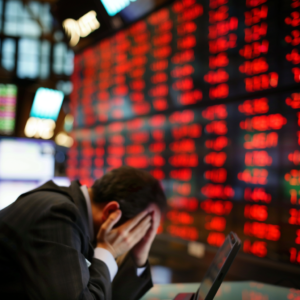
Predictably, the market is taking this news hard. As an investor in the midst of this Wall Street meltdown, what should you do now?

Well, you can panic and sell. (That hasn’t been terribly productive in the past.) Or you stick with your discipline – provided it is a good one.

For years we have been beating the drum for the fundamental principles of investing: Buy quality. Diversify broadly. Asset allocate properly. And think long term.

Let’s take a closer look at each of these…

Though Stocks Are Down, There’s Still Great Companies Available

It’s true that stocks of all stripes are down, both here and abroad. But if you own great companies, they will recover when this storm passes.

It’s been almost exactly 10 years since another major financial crisis hit world markets. Russia defaulted on its sovereign debt, something once unthinkable. (Yields on ruble-denominated debt soared to more than 200%.) That set off a chain reaction in world debt markets that caused the collapse of hedge fund giant Long-Term Capital.

For a while there was chaos in world markets. But you know what? Most of us survived. And, after a while, the world went on about its business. 

Today that crisis seems like nothing more than a blip on the charts.

Personally, I think the current credit crisis is going to be more stubborn, more persistent.  Because the problems they face are more widespread. They stem from deep-seated problems in the nation’s real estate and mortgage markets. (The deflating of a massive bubble.)

This situation is simply going to have to play out. Some homeowners are going to become renters. Some bankers, realtors and mortgage brokers are going to become bartenders. 

But, in the end, the underlying strength of the American economy will prevail. Just as it always has in the past: Through financial crises, war, inflation, recession and depression.

That doesn’t mean that things aren’t going to get worse before they get better. But as I’ve said in this column many times, you shouldn’t have money in the stock market that you need in less than five years.

If you do, you are a trader. Not an investor. 

Diversify Your Portfolio Through Asset Allocation

A long-term investor diversifies beyond traditional stocks. Our Oxford Asset Allocation Model, for example, suggests that you should not have more than 60% of your total portfolio in equities.

You should have 10% in investment grade bonds, which are up today. You should have 10% in inflation-adjusted Treasuries, which are up today. You should have at least 5% in gold shares, which are up today. 

You asset allocate to reduce your portfolio’s volatility and protect your capital in difficult times like these.

Your worst enemy right now is not likely to be the market but your emotions. Deeply ingrained instincts prompt us to “do something” when we feel threatened or nervous. But strong emotions are often the prelude to bad decision-making.

The Gone Fishin’ Portfolio & Long-Term Success

In my new book “The Gone Fishin’ Portfolio,” I put forward a plan that offers a high probability of long-term success. But I concede that the ultimate outcome depends on the investor himself. 

That’s why I included an entire chapter on managing your expectations and dealing effectively with the psychological hurdles the market throws in your way from time to time… as it is now. 

  • First off, do a reality check. Recognize that investing in stocks means your account value is bound to sustain wide fluctuations from time to time.       

  • It’s unrealistic to think that you’re going to earn the superior returns only stocks can give while watching your account rise as smoothly as a savings account. (Investors who think this way are expecting what never was and what never will be.)      

  • I also show you how to automate your investments and invest unemotionally, regardless of how you may feel. As Warren Buffett said of he and his partner Charlie Munger, “Inactivity strikes us as intelligent behavior.” 

In short, it’s one thing to feel fearful about the market. It’s quite another to let that fear trump your well-laid investment plans.

Studies in Behavioral Finance clearly demonstrate that it’s not your store of market knowledge that is most likely to determine your success as an investor. It’s whether you let your emotions dictate your actions.
 
That’s not a problem in good markets. The test of your resolve is times like now. 
Govern yourself accordingly.

Good Investing,

Alex

P.S. You can purchase “The Gone Fishin’ Portfolio” at your local bookstore. Or you can buy it for 34% off the cover price at Amazon.)

Today’s Investment U Crib Sheet

  • Prices of major financial stocks have been decimated as the credit crisis has grown. In just the last two weeks more than a few companies have taken it on the chin…
Company Ticker Sept 1st Sept 15th % Difference
Bank of America (BAC) $31.14 $28.85 -7.35%
Merrill Lynch (MER) $28.35 $21.21 -25.19%
Fannie Mae (FNM) $6.84 $0.64 -90.64%
Freddie Mac (FRE) $4.51 $0.40 -91.13%
American International (AIG) $21.49 $5.68 -73.57%
Goldman Sachs Group (GS) $163.97 $147.45 -10.08%
Morgan Stanley (MS) $40.83 $33.92 -16.92%
  • Bank of America has been one of the few banks that haven’t seen their stock price seriously affected. In fact, if Merrill Lynch’s purchase hadn’t dragged down the stock 15% today, shareholders would be looking at an 8% gain for the month.      

  • Alex Green warned us about buying bank stocks. Recently, he showed us the right way buy bank stocks in a bear market, and why right now isn’t the time to jump back in Investment U Issue #828, Buying Bank Stocks: Good Bet or Big Gamble?      

  • Just last month, legendary investor Jim Rogers spoke about the credit crisis. In an exclusive interview with Keith Fitz-Gerald, he explained why he’s adamant about the Federal Reserve, and what the “Average Joe” should be doing right now in Investment U Issue #842, Jim Rogers: The Legendary Investor Speaks About The Credit Crisis.
Related Investment U Articles:


McAfee Secure sites help keep you safe from identity theft, credit card fraud, spyware, spam, viruses and online scams
Sign Up now and receive this Free report:

The Three Best Stocks to Own in 2010.


The Company Set to Dominate a $60 Billion-a-Year Market

$60 billion is spent on cancer treatment in the U.S. - each year. And one company is poised to receive the lion's share of it.

The medical director at the Alta Bates Comprehensive Cancer Center says, "...possibly a third of our cancer patient population will soon be undergoing this [company's] treatment."

Another doctor at the University of Texas MD Anderson Cancer Center says he intends to treat over 1,000 patients a year with this technology.

Here's how you can claim your stake in the company before this cash infusion sends shares soaring.

Share Investment U:
  • email
  • Print
  • Digg
  • Sphinn
  • del.icio.us
  • Facebook
  • Google Bookmarks
  • Propeller
  • StumbleUpon
  • Technorati
  • Yahoo! Buzz
  • Reddit
  • NewsVine
  • SphereIt
  • Twitter

Comments

**By submitting your comment you agree to adhere to our Comment Policy and Privacy Policy.

Check out our selection of daily Investment Research:

IU Blackboard IU Archives


Alexander Green has discovered a secret from the past that can help you make tons in the future. Learn more...

Recent Articles


Search Investment U


Platinum Services

Oxford Club
The Oxford Club
is an exclusive, global network of investors, who collectively participate in the pursuit of prosperity and wealth. The Club is renowned for its market-beating, tried-and-true investment principles.


White Cap The White Cap Report exclusively identifies companies, White Caps, which - by being among the earliest to gain traction - have secured dominant positions within untapped, billion-dollar markets.

The Most Comprehensive Investing Course Available to the Public


What Readers Are Saying…

"Always enjoy what you have to say, and learn something new (and useful) almost every time. Thanks again for your outstanding work." Jeff K.

"I just want to say a quick thank you to Alexander Green for not only his sage advise, but his reassuring words of encouragement that we all need right now." Bryan W.


Alexander Green, Chief Investment Strategist

Alexander Green is the Investment Director of The Oxford Club. A Wall Street veteran, he has over 20 years experience as a research analyst, investment advisor, financial writer and portfolio manager.Learn More...

What Alexander Green is working on right now:

We just finished compiling the numbers for 2009. And wow...

Alexander Green led his Momentum Alert subscribers to 14 double-digit winners... more than one every month. But even more impressive?

Following his recommendations, they could have doubled their money - or better – on average, once every three weeks! That's 18 triple-digit gainers in the course of the year. In fact...

Add up the gains and you'll see this red-hot service generated 3,349% in just 12 months.

That includes everything – winners and losers. Learn More...