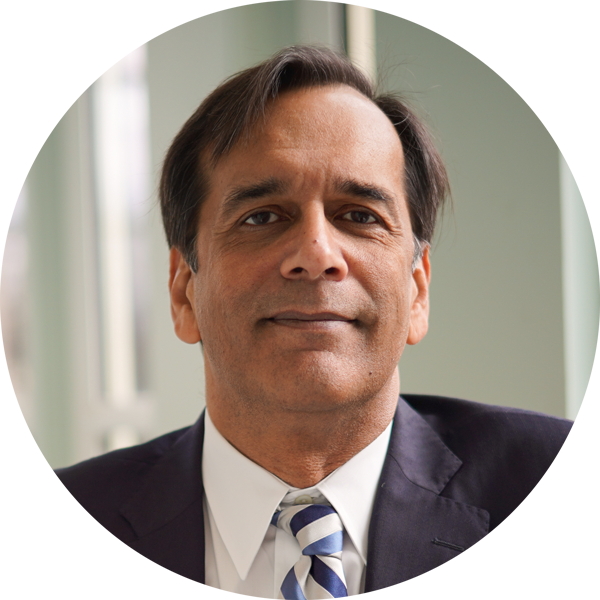
The Investment U e-Letter: Issue # 733 Tuesday, November 20, 2007 The India Stock Market: An Interview with India Market Expert Karim Rahemtulla by Karim Rahemtulla, Advisory Panelist Editor's Note: India's stock market is up 571% in the last four and a half years. A return like that here in the U.S. would put the Dow over 55,000 today. Not likely to happen any time soon
But is the staggering run in India sustainable? Our friend and colleague Karim Rahemtulla just got back from a 17-day "on the ground" research trip to the country. Karim, the Investment Director of Mt. Vernon Research, is one of the shrewdest investors I know. And when it comes to India, he's our go-to guy
This is Karim's third fact-finding mission to the country in recent years. This time, he met with government officials and key personnel at some of India's biggest companies - HDFC Bank, Infosys and Satyam. He also met with the folks from Quantum Funds and Zee TV - India's mega media conglomerate, whose operations span satellite broadcasting and cable distribution to music publishing and the creation of animation software. This morning, I asked Karim to share some of his findings. Take notes! ~ Alex Williams Publisher, Investment U Alex Williams: In five years, will investors be kicking themselves for not buying into India's stock market today? Karim Rahemtulla: Yes, most certainly they will. But today is not the exact time to be buying into the Indian market. It's overvalued by almost any measure, and due for a sharp correction within the next 12 months. That will be the opportunity. I would say anything under 12,000 on the BSE [India's national index (^BSESN)] constitutes a buying opportunity. Right now, India is enjoying a tremendous amount of foreign investment. These dollars, yen, pounds, and euros are chasing a very illiquid basket of stocks - never a good idea. Just consider that of the 7,000-odd companies listed in the Indian markets, fewer than 300 have trade volume of more than $1 million per day. That's about what a small-cap stock trades in the U.S. AW: What's the growth rate look like in India, compared to, say, China? KR: It is very similar, averaging in the high single digits. But India has a much lower base from which to grow
GDP-wise, it is far behind China. The country has no export market to speak of outside of outsourcing and technology. And it has a very weak and fragmented manufacturing base. You don't hear about "Made in India" for a reason. That being said, when you start from a lower base - and have the momentum at your back and the will to move forward - the future looks bright if you buy at the right time. AW: What about India's middle class? What are they spending their money on? KR: Washing machines, flat screens, cars and eating out. Sounds familiar to the U.S., doesn't it? India has its own idea of the American dream, but it is slightly different in that it is about 30 years behind. The use of credit cards and mortgages is just starting to catch on. And this will have a multiplier effect on the economy; it already is. This will allow consumers to buy more than they could normally afford, generating more jobs down the line. The downside, of course, is a reduction in savings rates and the tendency to over-consume. AW: What are India's three fastest-growing industries? KR: Outsourcing, high technology and entertainment top the list, with banking and vehicle manufacturing running close behind. India has a lot of people - that's not news. But the companies that can satisfy the growing consumption needs of these people will be the ones that succeed. The industry with the most potential is actually the infrastructure business. There are more good paved roads in Texas than in all of India. There is a long way to go. AW: Any particular companies you'd like to own right now? KR: I would be dipping my feet into the software and technology sector. Companies like Infosys (Nasdaq: INFY) and Satyam (NYSE: SAY) are experiencing some decline in share price due to the strong rupee. That will change as the Indian government intervenes to weaken the currency. It's in their best interest. Both companies are growing at 20% to 30% per year and are fundamentally strong, generating millions in profits and cash. Infosys just had its first billion-dollar year, in terms of profits. AW: You mentioned the illiquid nature of India's stock market. Is it safe yet, for U.S. investors? KR: Yes and no. Any emerging market is prone to volatile swings. India's market is no different. AW: How many companies are available for purchase through ADRs? KR: Unfortunately, there are few stocks available to U.S. investors, in terms of ADRs. And that makes investing in India a very tricky proposition. AW: How about ETFs? If someone wants to "own" India in one fell swoop, is there an ETF to consider? KR: The iPath MSCI India Index Fund (NYSE: IPN) is worth looking at. It tracks the MSCI India Total Return Index. And Infosys is its #1 holding, at 13.7%. Satyam is also in its top 10 holdings, accounting for 3.3% of the fund's assets. And its expense ratio is less than 1%. AW: Thanks, Karim. KR: My pleasure. The $867 Billion Big Money Bang After nearly two years of soaring oil prices - and a 200% rise in the price of crude - something remarkable is happening
Billions of dollars of OPEC's mega oil profits are pouring into dozens of select businesses for the first time ever. For 27 years OPEC's profits have sat virtually stagnant. Now this mountain of money is helping to create one of the biggest expansions in history, with profits outpacing gold, telecom and the Internet combined. Investors who know how to capitalize on this big money bang could pocket 20, 30, even 50-to-1 gains, starting next week. Learn more here. Related Articles Investment U Archive 
|