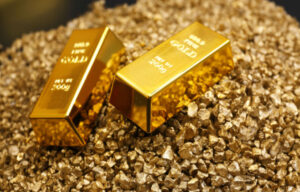
Commodities Trading: The Two Best Ways to Play the Commodity Markets
by Alexander Green, Chairman, Investment U; Investment Director, The Oxford Club
Monday, July 2, 2007: Issue #689
In October 2002, I wrote an urgent message to Oxford Club members:
“Most people don’t know it’s possible to make money by trading commodities anymore. Many of today’s investors didn’t see gold shooting from $35 an ounce to $675 in the ’70s or oil skyrocketing from $2 a barrel to $35.
“If you walk into Merrill Lynch today, the nation’s largest brokerage, they will politely tell you they don’t handle commodities anymore.
“And that’s unfortunate. Because raw material prices are so depressed right now that even a mild economic recovery will cause earnings at major commodity companies to vault higher.”
That ended up being one of our better calls.
The Commodity Bull Is Raging
Since January 2003, gold is up 87%, crude oil is up 112%, nickel is up 224%, copper is up 366% and uranium is up 1,233%. And we’ve bought a number of stocks along the way – including the world’s largest natural resources company BHP Billiton (NYSE: BHP) – to capitalize on the upsurge.
Why did the commodity bull catch most analysts by surprise? Because raw materials prices traditionally surge during war or other financial or political turmoil, when businesses worry about obtaining the supplies they need and investors seek the safety of tangible assets.
Or they serve as an inflation hedge. For instance, commodity prices surged during the inflationary ’70s, then steadily declined in the ’80s and ’90s as inflation subsided.
Commodities are excellent portfolio diversifiers, too. Historically, commodities have rallied when stocks and bonds are falling.
But recent history has defied conventional wisdom, as history often does. Commodities have soared alongside stocks and bonds, without a major political or economic calamity, and in the absence of hyperinflation.
I believe raw material prices still have room to run. So let’s take a look at what’s behind this major bull market in commodities and look at two of the very best – and safest – ways to play it.
Commodities: A “Boring” Way To Profit From Global Demand
Strong global growth – particularly from emerging giants like India and China – is the primary mover behind these rising prices. It has pushed up demand for fuels, metals, grains and other raw materials.
With the world’s population growing steadily and free market reforms taking hold around the globe, it’s reasonable to expect commodity prices to keep pushing higher.
There are two very different ways to play this trend. One is to speculate in commodity options and futures. The other is to hold a diversified commodity fund. The first sounds exciting and profitable. The latter sounds dull and boring.
In this case, go with dull and boring.
I know. I know. You can go to a backyard barbecue this summer and talk to plenty of investors who are making money trading in the commodities market right now. It’s easy, they’ll tell you. It’s profitable. And it’s fun.
Many of these folks are about to get an education that makes the cost of four years at Princeton look like a bargain.
In fact, many of them are often the very same folks who suddenly became financial geniuses when they bought Yahoo! or Priceline back in the late ’90s. They were riding a trend. And they were right until, of course, they were utterly and completely wrong.
It’s hubris for the small investor to believe he can correctly assess all the subtle supply and demand factors – most of which aren’t visible to the public – that drive commodity prices day-to-day and week-to-week.
And when you’re wrong in an option or futures contract, time is not your ally.
Two Ways to Play the Commodities Market
If you want to ride the bull market in commodities, you’re better served owning a fund that tracks a diversified commodity index. Here are two of the best:
- The Rydex Commodities Fund (RYMBX) strives to replicate the Standard & Poor’s Goldman Sachs Commodity Index, which tracks 24 products in five sectors – energy goods like oil and gas, industrial metals like copper and nickel, precious metals like gold and silver, and agricultural products like cotton, coffee and livestock. (Energy products account for 70% of its value.)
- The PIMCO Commodity Real Return Fund (PCRDX) seeks to match the performance of the Dow Jones-AIG Commodity Index. This index is actually broader than the Goldman Sachs index because no one sector can account for more than 33% of the total value.
It’s likely you can buy either of these funds through your existing broker. But with different classes of shares offering different fee structures, get the facts first.
Good Investing,
Alex
Today’s Investment U Crib Sheet
In a report last week, Deutsche Bank raised its price forecast of copper, citing low supplies and a continuation of strong demand from China. According to CNNMoney, the firm also raised targets for lead, aluminum, nickel and zinc.
“We expect robust global growth to persist into 2008 helped by strong emerging market demand that is occurring from industrialisation,” the report said. “We doubt the ability of supply to keep adequate pace with this unrelenting demand.”
Copper prices have climbed 372% since June 2002.
Here’s a look at the 1- and 5-year returns of both precious and base metals:
| Metal | 1 Yr | 5 Yr |
| Gold | 6% | 104% |
| Silver | 13% | 144% |
| Platinum | 4% | 151% |
| Palladium | 15% | 14% |
| Copper | 4% | 372% |
| Nickel | 62% | 524% |
| Aluminum | 9% | 94% |
| Zinc | 16% | 328% |
| Lead | 163% | 480% |
| Uranium | 199% | 1,273% |
Of course, we can’t show you a spot quote for water. But here’s why it could be one of the most undervalued – and profitable – commodities around. Read the full report here.


Investment U RSS Feed