How the Rare Earth Industry Will Help Rebuild Japan
by David Fessler, Energy and Infrastructure Specialist
Friday, March 18, 2011: Issue #1472
In yesterday’s article, my colleague, Louis Basenese, argued that investing in Japan spelled opportunity for long-term investors, but warned of three areas to avoid if you’re a short-term trader.
I’m going to pick up the baton and tell you about a little-known area that will play an integral part of Japan’s rebuilding efforts – and which could ultimately fare well, once the immediate shock and emotion subsides.
With the global stock markets naturally reacting terribly to the possibility of Japan’s nuclear situation going from disastrous to catastrophic, nearly every sector has suffered a beating.
That includes rare earth stocks…
Rare… Critical… And in Demand
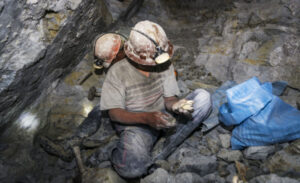
In case you don’t know, rare earths are a group of 17 metallic elements used in a plethora of consumer and industrial products. Many people don’t know anything about them, but they’re found in televisions, cars, cellphones, radar systems, fiber optic devices, wind turbines and many more.
Take the latter, for example. Rare earth elements are crucial to wind turbine manufacturing. Why? Because wind turbines contain very large magnets that are part of the generator that produces electricity from the spinning blades.
Each one-megawatt generator uses as much as one ton of the rare earth metal, neodymium, as well as other rare earths.
Simply put, our way of life wouldn’t be possible without rare earth elements. They’re vital to all economies… including Japan’s.
Trouble is, Japan is the largest importer of rare earths from China (which is responsible for 95% of global rare earth production), gobbling up about 50% of Chinese rare earth exports.
So what do you need to know?
With Nuclear in Trouble, Alternative Energy Will Grow… and So Will Rare Earths
Former Bank of Japan Deputy Governor Toshiro Muto says Japan’s rebuilding costs from the current disaster could hit 20 trillion yen ($245 billion). That’s double what it cost to rebuild after the Kobe earthquake in 1995.
That means demand for rare earth metals will increase… dramatically.
However, while Japan’s demand will ratchet higher, the need for these metals isn’t exclusive to the world’s third-largest economy.
Take wind power in the United States, for example.
U.S. Secretary of Energy Steven Chu and Secretary of the Interior Ken Salazar recently announced a major initiative to advance the development of offshore wind power.
And given the current nuclear crisis taking place – with Japan raising the threat from Level Four to Level Five today (to put that in perspective, Chernobyl was a Level Seven) – it’s likely that the proposal will sail through Congress with little resistance. Particularly with President Obama having already announced a plan to produce as much as 80% of America’s power from clean sources like solar and wind.
In addition, there’s a good chance that some U.S. nuclear plans will be scrapped in the wake of the Japanese crisis. Especially if the situation continues to deteriorate and large amounts of radiation are released.
Just the fear of that happening has refocused the world’s attention on power sources like wind, which, while more expensive, carry little or no risk to humans or the environment.
And that will amp up demand for rare earths in the process.
It remains to be seen how much this increase will affect China, which has recently been very vocal about its continued increase on export limits of rare earths. But last Wednesday, the laughably long-winded Inner Mongolia Baotou Steel Rare-Earth Hi-Tech Co Ltd, the world’s largest producer of rare earths, announced plans to almost double its output of rare earth magnets to 10,000 tons by 2015. That would also double its market share.
Here are a couple of other ways to play rare earths…
These Rare Earths Are on Sale
Stocks to consider include Molycorp, Inc. (NYSE: MCP). It’s a development-stage rare earth company, based in Colorado. It plans to start a new wave of mining this year and is currently processing stockpiled ore from a previous mining operation on its site.
Australian rare earth producer Lynas Corporation (OTC: LYSDY) is another way to play the sector.
So while shares of rare earth producers are down since the Japan disaster, with nearly limitless demand, investors would be wise to have some exposure to the sector, since that demand will come from a multitude of sectors. Companies outside of China are clearly a good bet – and right now, they’re all on sale.
Good investing,
Dave Fessler
Any investment contains risk. Please see our disclaimer.
9 Responses to “How the Rare Earth Industry Will Help Rebuild Japan”
Comments
By submitting your comment you agree to adhere to our Comment Policy and Privacy Policy.


David Fessler is the energy and infrastructure expert for Investment U.
I can’t help wondering why there was no mention of Stans Energy RUU.v with regard to rare earths. Their web site shows what could be great potential.
D.J.
Reply
Are there any good Canadian companies in the rare earth sector?
Reply
Avalon and Ucore come to mind.
Reply
What about Singapore?
Thank you.
Reply
Don’t forget Stans Energy Corp. of Canada who recently purchased KCMP rare earth processing facility, rail, RE deposits, etc. See http://www.stansenergy.com/ for detailed information.
Reply
Good article on Rare earths – and nice that you actually mention some names rather than just tease as so many emails do.
I have owned Lynas for several years and it has tripled over time – went up 7% in one day this week. Eventually China will be importing rare earths rather than simply blocking their export.
Best wishes, but I would be careful about so called rare earth outfits that only have a distant gleam in some promoter’s eye.
Reply
Ditto the Above. Stans should be good.
Reply
Thank you for your comments. It seems to me that entities offering solar power components and construction should benefit from the present attitude that both oil&gas and nuclear are falling out of favor. Yet, you had no mention of those in your short overview. Perhaps in a later message you may wish to address this — as well as the slack that natural gas exploration, transmission, and energy production entities may also benefit from the present environmental drift.
MM
Reply
Great Western Minerals at under a buck is as good as there is.
Reply