The Country That’s Solving The Nuclear Waste Problem
by Tony D’Altorio, Investment U Research
Friday, April 22, 2011
We’ve all seen the headlines… read the stories… seen the news…
The nuclear accident at Japan’s Fukushima plant may rival the 1986 Chernobyl disaster. One of the gravest dangers it faces involves the decades’ worth of spent fuel rods crammed into cooling tanks.
Each one contains fatal levels of radioactive isotopes, including several types of plutonium.
The whole mess exposes just how far the world has to go to find a permanent solution for the tens of thousands of tons of high-level radioactive waste stored in temporary facilities.
So far, no country yet has implemented a long-term solution. But one is getting very close…
Japan’s Solution to Nuclear Waste Disposal
Japan itself has long sought to reprocess its nuclear waste into MOX. That product, a mixed plutonium-uranium fuel, could then feed back into reactors.
The scenario appealed to them because of their location in the Pacific Ring of Fire. As such, the region’s frequent earthquakes make burying nuclear waste underground a foolish endeavor.
But despite good intentions, the Japanese plan suffered under both accidents and delays.
For one, two workers at a reprocessing plant in Tokai died in 1999 when they accidentally mixed buckets of uranium into an unprotected tank. This caused a nuclear chain reaction that spread radiation through the facility.
And another plant in Rokkasho is still not fully operational – 17 years after construction began.
The United States Nuclear Waste Solution
The United States hasn’t done much better in creating a decent solution for nuclear waste.
It already has 62,500 metric tons of high-level nuclear waste stored around the country. And according to the Nuclear Energy Institute, it produces 2,300 tons more each year.
- Of course, the U.S. does have the world’s only active deep level nuclear waste repository, in New Mexico. But it only takes waste from military weapons research and production.
- Some of what comes from civilian sites is stored in pools such as those at Fukushima.
- Others are relegated to steel containers using a method called dry cask storage.
Billions of dollars went towards planning a permanent repository for civil nuclear waste in Nevada. But President Obama scrapped it amid strong local opposition, as the NIMBY (Not In My Back Yard) crowd raised a ruckus.
Opponents said the status quo worked perfectly fine for the time being. They claimed that waste could be “safely” stored for decades using dry cask storage or pools until research found a more permanent solution.
But in the light of the Fukushima disaster, that position looks rather laughable now…
The Swedish Solution to Nuclear Waste Disposal
A continent away, however, Sweden perhaps has the best solution so far for nuclear waste disposal.
After three decades of planning and 15 years trying to win local support, it recently saw a formal application submitted to build a permanent repository for high-level nuclear waste.
If the plan passes, Sweden would become the first country to bury spent nuclear fuel until it is no longer a threat. (Though, admittedly, that process takes at least 100,000 years.)
Right now, the near $3.8 billion proposal depends on the Swedish Radiation Safety Authority’s say-so. If approved, construction will begin at Osthammar, a small town two hours north of Stockholm, near Sweden’s existing low-level nuclear waste disposal site.
- Under the plan, construction on the underground facility would begin in 2015. And the plant would come online in 2020.
- By then, a 5-kilometer ramp will connect 60 kilometers of tunnels covering 4 square kilometers.
- The repository will sit 500 meters below the surface in nearly 2-billion year-old granite bedrock, using a clay buffer for protection.
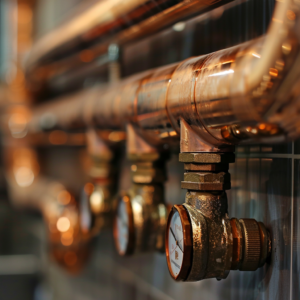
- As for the spent rod fuels themselves, those will be put into copper canisters, with each holding 12 fuel assemblies.
All told, the facility should hold some 6,000 such containers.
In the end, the entire future of the nuclear industry might depend on the success of this Swedish solution.
Good investing,
Tony D’Altorio
Any investment contains risk. Please see our disclaimer.
2 Responses to “The Country That’s Solving The Nuclear Waste Problem”
Comments
By submitting your comment you agree to adhere to our Comment Policy and Privacy Policy.


Reactor waste is highly radioactive precisely because it has a short half life. Thus reactor waste does not stay “hot” for 150,000 years but is down to an official safe level in about 50 years and less radioactub=ve than the ore it was mined from in 300.
Perhaps the reference to 150,000 is to the plutonium not burned in the reactor since after a certain level of impurity is reached it becomes impracticla. The sensible answer is to refine the plutonium and use it again. It is not waste if it is extremely valuable.
Reply
It remains true that “if you don’t know how you got here, you don’t know where you are and you don’t know where you’re going.”
Some real-world history from just over three decades ago is relevant to understand the truth about all the spent nuclear fuel stacked up all around the world today. If you talk to anybody intelligent in the nuclear industry, most of them will eventually admit that the whole 100,000 year repository thing is nonsense, since they believe that all that so-called “spent fuel” will be too valuable in 30-80 years’ time to leave in the ground. It will either be dug up to recycle in our own reactors or else to be sold to the Chinese, or someone similar.
[1] Very simply, under the Carter administration — starting in 1977 — the U.S. stopped nuclear fuel reprocessing at home and exerted enormous pressure to obstruct it everywhere else in the world. This Carter-era initiative was driven by valid U.S. fears about the potentials that reprocessing afforded then — and affords today — for nuclear weapons proliferation. That initiative and the fact that the “once-through fuel cycle” was cheaper for plant operators are the reasons that nuclear fuel isn’t today being disposed via advanced reprocessing as was originally planned during the 1950s and ’60s. So the fact that the world has these stacked mountains of spent nuclear fuel is largely due to the unstinting efforts of the U.S. over the last three decades. In the Fukushima catastrophe’s wake, expect some Japanese critics to remember that eventually and turn on us. There’s endless documentation of this, but start with this account from the Federation of American Scientists : -
“Nuclear Fuel Reprocessing: U.S. Policy Development”
http://www.fas.org/sgp/crs/nuke/RS22542.pdf
[2] The last three decades of U.S. nuclear policy have been, therefore, a total reversal of the atomic power project’s original intent during the “electricity-too-cheap-to-meter” boosterism of the 1950s and ’60s. We got the front half of a version of a nuclear energy industry that suited the military-industrial complex, but nothing of the back half — as if we got universal toilets without sewage treatment plants. But the designs for those sewage plants exist, since the original plan was never to have these vast stacks of spent fuel put into repositories like Yucca Mountain or, for that matter, left beside reactors as has been disastrously the case at Fukushima-Daiichi.
[3] Countries like France ignored the U.S., in any case, and over the last thirty years developed and implemented reprocessing. Now the global norm is that most countries are planning to ‘close the fuel cycle.’ See for example –
http://www.nautilus.org/publications/essays/napsnet/forum/2009-2010/nuclear-power-and-spent-fuel-in-east-asia-balancing-energy-politics-and-nonproliferation
http://2010.atomexpo.ru/mediafiles/u/files/Presentation/VasudevaRao.pdf
[4] The U.S. has begun acknowledging that it’s lost this battle and is quietly moving towards the same position as the rest of the world. That’s part of the reason for the cancellation of Yucca Mountain as the national nuclear waste repository and the Obama administration’s Blue Ribbon Commission on America’s Nuclear Future. The U.S. really has no choice, not least because the Generation IV reactor designs are all pointing in this direction
Not only would Gen-IV designs like the IFR (Integral Fast Reactor) and the LFTR (Liquid Flouride Thorium Reactor) achieve high burnup and close the fuel cycle, but various fusion-fission and fast-neutron reactor designs could burn down the long-lived actinides and eliminate radioactive waste altogether.
5] To sum up: “Closing the fuel cycle” could mean solving the problem of nuclear waste, but such advances are Janus-faced. For example, uranium-plutonium fast burner reactors and fast breeder reactors are much alike: the challenges to the development of burners and breeders are very similar.
Industrial nuclear transmutation looks about two to three decades away, in other words and this is both good and bad news. Good news because it could make nuclear energy sustainable into the quite long-term future and solve the problem of nuclear waste. Bad news because we stand potentially at the dawn of the golden age of nuclear arms proliferation.
Reply