Water Industry Infrastructure: A Ticking Time Bomb Across the United States
by David Fessler, Energy and Infrastructure Expert
Thursday, April 29, 2010: Issue #1249
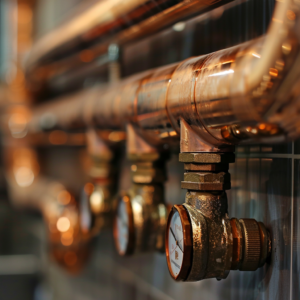
By the time you’ve finished reading this article, another three water pipes will have burst somewhere in the United States.
Breaking at a rate of just over one per minute, it equates to about 540,000 bursts per year across America’s 1.8 million miles of water distribution lines.
You’ve probably seen some of the more spectacular water main breaks on the news. All told, U.S. water leaks total about six billion gallons per day, according to the American Water Works Association (AWWA) – enough to fill 200,000 backyard swimming pools.
It’s a situation that illustrates the massive problems for America’s water industry. And those problems are getting worse, due to one major reason: the country’s archaic infrastructure…
Massive Water Infrastructure Problems Requires Massive Investments
Because much of the U.S. water infrastructure has been in place since World War II, it’s no surprise that many systems across the country are in disrepair.
For instance, the Hoover Dam, which pumps water to Las Vegas, Los Angeles and many other cities in southern California, is 74 years old.
Much of the U.S. water infrastructure is even older, with the age of water pipes stretching back 80 to 100 years in cities like Washington, D.C., Los Angeles and Chicago. Incredibly, there are pipes in New York City and Boston that still have some of the original wooden pipes laid in the ground nearly 200 years ago.
Naturally, the investment required to repair and upgrade the infrastructure is staggering.
The American Society of Civil Engineers’ most recent forecast puts the total at $14 billion annually for drinking water systems. Another $19 billion a year is needed for sanitation water systems. And it estimates that over the next two decades, it will take $1 trillion to repair or replace these worn out pipes.
Unlike the electrical grid, though, repairing and upgrading the water grid usually involves tearing up streets. Not only is this more expensive, the disruption to traffic and commerce merely adds to the cost of the problem.
But according to the U.S. Census Bureau, states and municipalities are under-funding the water infrastructure. And it’s creating an investment gap of monumental proportions – nearly $5 billion per year.
And if you add in rising sea levels, shrinking aquifers and snow packs, the AWWA estimates that as many as 36 states could face serious water shortages in as little as five years.
So what are the solutions?
Water Infrastructure: The Companies Plugging the Gaps
For all the talk about oil, natural gas and electricity, they pale in comparison to the importance of water.
We can survive without electricity. But we’d all be dead in a week without clean, freshwater. It’s the most precious commodity on Earth. No matter where you live… whether you’re rich or poor… there’s nothing more critical to survival.
But as the global population grows (projected to hit nine billion by 2025) and pollution increases with it, the water infrastructure problems aren’t going to disappear. In fact, as the situation becomes more dire, it opens up potentially lucrative investment opportunities, as companies strive to boost water resources.
Historically, fixing the water demand problem has been to tap into more rivers or drill more wells. But environmental concerns, combined with the increasingly limited availability of water, make this less of an option.
Given that 97% of the water on Earth is seawater and just 3% is freshwater, fit for human consumption, coastal states are considering desalination as an alternative. The largest desalination plant in the United States is in Tampa, Florida. It desalinates 25 million gallons of saltwater every day.
Two of the biggest players in the desalination game are Dow Chemical (NYSE: DOW) and General Electric (NYSE: GE).
But a better way to play this area is through Consolidated Water Company, Ltd. (Nasdaq: CWCO). It operates desalination plants and water systems in the Caribbean, serves customers through various subsidiaries in the Cayman Islands, Belize, the Bahamas, and the British Virgin Islands. You could also take a look at Energy Recovery, Inc. (Nasdaq: ERII).
My favorite water stock is Nalco Holding Company (NYSE: NLC). Nalco is the largest water treatment and water process improvement company. Its Water Services Division serves the commercial and industrial areas, serving sectors like food/drink, manufacturing, aerospace, chemicals, mining, pharmaceuticals, plus hospitals, hotels and colleges.
Israeli start-up TaKaDu is taking a different approach to the problem – and a potentially more lucrative one. It provides water companies with infrastructure monitoring services. Its sophisticated software captures readings from existing meters and other monitoring equipment. It analyzes flow rates, systems pressures and other factors to predict leaks and other potentially disruptive events before they actually happen.
Costs are dependent on the size of the water system being monitored. A number of water utilities in the United States are experimenting with TaKaDu’s services.
The Greatest Investments of the 21st Century Are in These Sectors
Many people take the availability of fresh water for granted. Just another boring commodity that is always there when needed.
But as Jeffrey Sachs, Director of the United Nations Millennium Project, bluntly states: “The world is running out of water. We need a radical plan to tackle shortages that threaten the ability of humanity to feed itself.”
So forget boring. Water is the single-largest health problem in the world.
What’s more, the global water industry is a $460 billion market. And as the population grows, pollution increases, supplies become more scarce and more strain is placed on creaking infrastructures, it’s no surprise that analysts have dubbed it “blue gold,” because of its immense profit potential.
Fortune says: “Water promises to be to the 21st century what oil was to the 20th century: the precious commodity that determines the wealth of nations.”
The infrastructure problem within the water industry is just another example of the big money that is beginning to pour into the energy and infrastructure sectors – and will continue to do so for decades.
That means substantial profit potential is on tap. And investing in companies that are aiming to solve the world’s energy and infrastructure problems could be one of the best investments of the 21st century.
It’s the reason why I’m launching a new investment service – Peak Energy Strategist – which focuses specifically on the energy and infrastructure sectors and the top companies within them.
We’ll release the service to the general public on May 18. But stay tuned to your e-mail later today and look for a special report from us, where I’ll provide full details on how to take advantage of these opportunities ahead of the crowd.
Good investing,
David Fessler
- Fresh Water Is The World’s Most Critical Commodity… Here’s How You Can Profit From It
- The “Oil of the 21st Century”… And How “Blue Gold” Can Make You Rich
- Energy Efficiency: Why the SEEA’s Spotlight is on the Southern States
9 Responses to “Water Industry Infrastructure: A Ticking Time Bomb Across the United States”
Comments
**By submitting your comment you agree to adhere to our Comment Policy and Privacy Policy.Check out our selection of daily Investment Research:
![]() |
![]() |


David Fessler is an Advisory Panelist for Investment U and The Oxford Club, one of the world’s most exclusive and prestigious networks of private investors.


April 29th, 2010 at 11:32 am
ASCE as well as EPA have been tracking the infrastucture backlog for about 40/30 years that I know of. And much the same arguments that you made here where made then. Only difference is that it has become somewhat worse. The solution is funding. And there hasn’t been much in the past. Given the US Debt and the limitations on how much more can be borrowed, and the US Deficit Reduction Commission, the infrastructure sector, especially the water and waste water infrastructure installation sector, is not going to see the gtrwth you might expect from the needs. Just like the previous 30 to 40 years of not seeing the needs being met. There may be more needs and more urgency, but there is much much less ability ($)to meet any of them than in the past.
Reply
April 29th, 2010 at 11:43 am
I agree 100% with your article!
That which seems obvious to some has no hint of action within our government whether that be local, state or federal. Our leaders in industry and government are all about building power and wealth to satisfy their own greed and our country can to to Hell!
Reply
April 29th, 2010 at 11:53 am
Utmost interesting artcle.
Is there an ETF which is infrastructure in WATER and another in ENERGY oriented resp.dedicated to avoid individual investments?
Do exist statistics about how the 3% of sweet water is distributed worldwide?
thanks,
Reply
Investment U Reply:
May 5th, 2010 at 1:29 pm
Hansluft,
There are several water investments available – both individual companies and ETFs.
In the United States, water investments to consider include:
– Watts Water Technologies (NYSE: WTS): The firm is active in North America, Europe and China and manufactures products focused on water flow, safety and conservation. It’s one of the leading companies in the water industry and sports a hefty $1.3 billion market cap. It kicks back a $0.44 annual dividend (1.2% yield).
– Energy Recovery, Inc. (Nasdaq: ERII): The small-cap company’s main focus is turning seawater into drinking water – a process known as desalination.
The easiest way to take advantage of the companies aiming to solve the world’s water problems, though, is to invest in an ETF. These funds buy shares of companies involved in water production, treatment, technologies and services and aim to replicate their combined share price performance all at once. Two to consider…
– PowerShares Global Water (NYSE: PIO): The fund invests in stocks that are part of the Palisades Global Water Index and ADRs within it. Just over three-quarters of its assets are invested in companies that derive at least half their annual revenue from water projects.
– Claymore S&P Water (NYSE: CGW): The fund invests in about 50 U.S. and international water-based companies that make up the S&P Global Water Index.
Thank you,
Investment U
Reply
April 29th, 2010 at 12:39 pm
right on the nose! this is probably the most meaningful article i’ve read in a long time. i look forward to your new service. d l h
Reply
April 29th, 2010 at 4:09 pm
I can’t believe you didn’t mention Insituform Technology, Inc, one of the grand daddys of them all when it comes to repairing and replacement of pipes of all kinds.
Reply
April 29th, 2010 at 8:14 pm
Hi,
Is the new start up company takadu in Israel trading on any exchanges?
Reply
April 30th, 2010 at 9:33 pm
You should also check out Hyflux Ltd (HYFXF), a Singapore company doing major desalination projects in China. It is a major player.
Reply
May 4th, 2010 at 11:20 am
As a licensed engineer in the water and sewer construction field for over 30 years, I would advise you to go slow. A lot of these studies are hyped to justify keeping the government purse strings open for their particular own agenda. The water and sewer infrastructure in this country is more than adequate to serve into the next century by simply maintaining what we have already constructed. Sure, there is the need for additional expansion and reconstruction, but not all the hype is related to that need. It is more a political outcry to continue the federal grant programs that are funded by increased taxes. The water coming out your tap is not going to disappear if these federal programs were to be eliminated.
Reply